Facials
Superficial chemical peel in Málaga
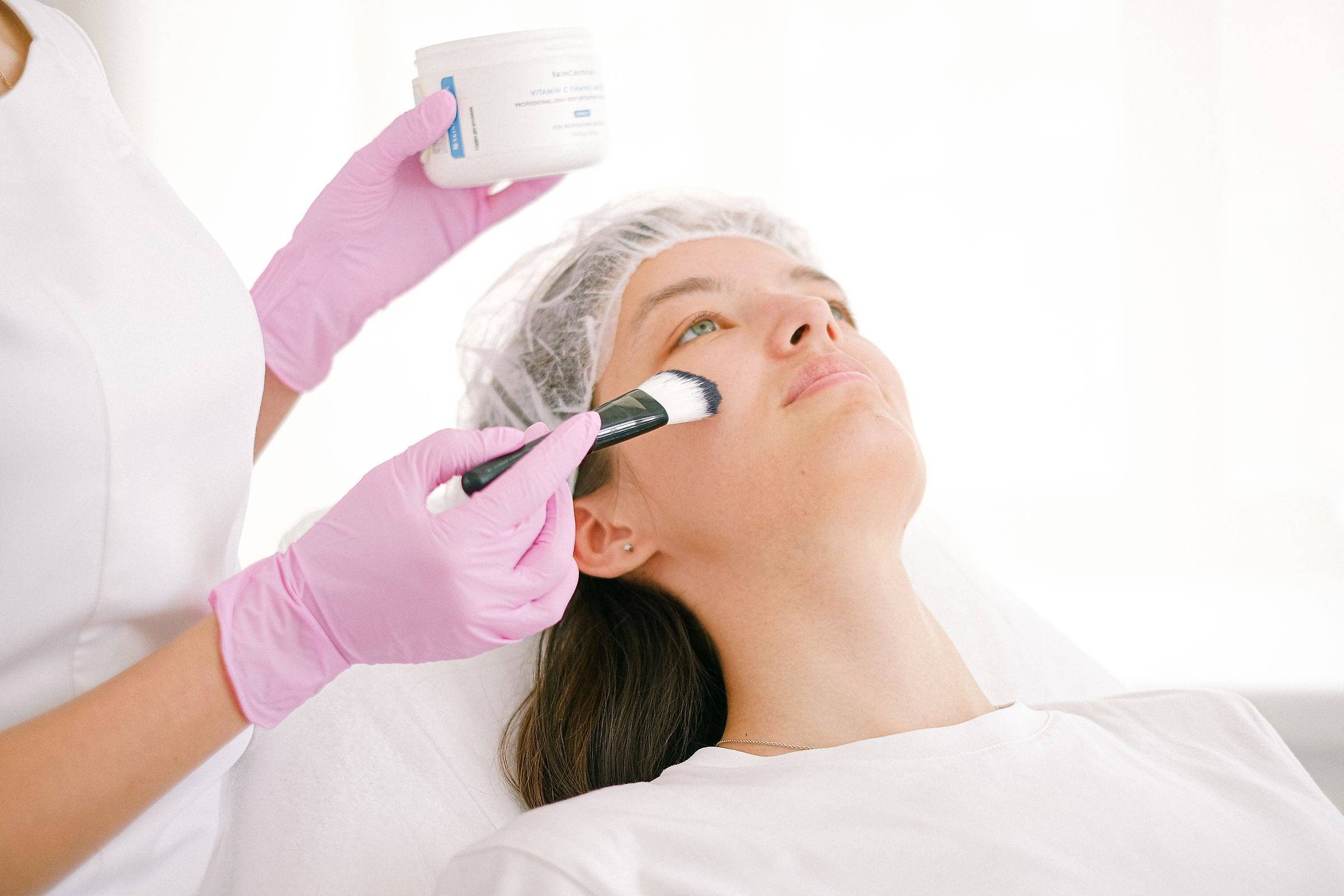
A superficial chemical peel is an exfoliation using professional cosmetic acids that loosen the bonds between dead skin cells so the skin can renew itself. At Narumi, in Málaga city centre, Marta Fernández chooses the formula for your skin to even out tone, refine texture and add radiance. A session takes about 30–45 minutes, usually as a course of 4 sessions every 2–4 weeks, with strict sun protection.
- Duration
- Approx. 30–45 min
- Sessions
- Course of 4 sessions, depending on your goal
- How often
- Every 2–4 weeks
- How it feels
- Brief tingling or warmth while the product works
What you can (and can't) expect
What it helps with
- Dull or uneven skin tone
- The look of superficial pigmentation, such as some sun spots
- Rough texture and pores prone to congestion
- Blemish-prone skin, outside of an inflamed breakout
- The look of fine lines caused by dehydration
What it doesn't do
- It isn't a medium or deep medical peel: it won't work on deep wrinkles or indented scars
- It doesn't add firmness or volume
- It can't be relied on to fade melasma or hormonal pigmentation; that needs a dermatologist's assessment
Is it right for you?
Ideal for
- Skin with an uneven tone or lacking radiance
- Combination or oily skin with congested pores and uneven texture
- Skin with superficial marks left by old spots
- Anyone wanting deeper resurfacing than a facial or diamond microdermabrasion
- People happy to stay on top of sun protection throughout the course
When we don't carry it out
- Pregnancy or breastfeeding
- A recent tan, planned sun exposure or sunburn
- An active cold sore, broken or irritated skin
- Oral retinoids (isotretinoin) in recent months, or topical retinoids you haven't paused
- Active inflamed acne, flaring rosacea or dermatitis
- Marks or moles that have changed shape, colour or size: see your dermatologist first
- A tendency to pigment after irritation, without a careful assessment beforehand
If you're unsure about your own situation, check with your doctor first. We'll go through it with you at your initial consultation.
Your session, step by step
-
Skin assessment
We look at your skin, your routine, your sun exposure and any topical or oral medication you use, and explain what to expect.
-
Cleanse and degrease
We remove make-up and oil so the product works evenly.
-
Applying the peel
We apply the chosen formula in thin layers, keeping a close eye on timing and how your skin reacts throughout.
-
Neutralising or removal
Depending on the product, we neutralise or remove it once your skin has responded as expected.
-
Soothe and protect
We finish with soothing skincare, moisturiser and a broad-spectrum sunscreen.
What a superficial chemical peel does
The cells in the outermost layer of your skin are held together like bricks and mortar. A superficial chemical peel uses professional cosmetic acids to loosen that mortar, so older cells shed sooner and reveal more even, radiant skin. Acids used at this level include glycolic, mandelic, lactic and salicylic acid; each behaves differently and is chosen to suit the skin.
The word ‘superficial’ matters. The peels we offer in a beauty and aesthetics centre work on the very top layer of the epidermis. Medium and deep peels go further, involve a longer recovery and are medical procedures. We don’t offer them.
How we choose your peel
There’s no one-size-fits-all peel. Oily skin with congested pores responds well to formulas that work inside the pore; dull, slightly dry skin to more hydrating formulas; sensitive skin to larger-molecule acids that penetrate more slowly. At your assessment, Marta also takes into account your phototype (how your skin reacts to the sun), your home routine (especially if you use retinol or acids) and how much sun you’re likely to get over the coming weeks.
During the session, the timing isn’t fixed: it’s adjusted to how your skin responds on the day.
Sun protection: the part of the treatment you do yourself
After a peel, your skin is more exposed to UV radiation and more likely to develop pigmentation if you don’t protect it. In a city as bright as Málaga, daily sun protection isn’t a suggestion; it’s part of the treatment. That’s why we prefer to schedule courses in the less sunny months, and ask you to wear a broad-spectrum sunscreen every morning, in winter too. All the aftercare is explained in our guide to skin care before and after a chemical peel.
When we’ll refer you to a dermatologist
If we see a mark that has changed, an irregular-looking mole, inflamed acne or any skin condition a doctor should look at, we won’t do the peel and will recommend you see your doctor or dermatologist. It’s a precaution that protects your skin.
After your session
Aftercare
- High-factor sunscreen every morning, reapplied when you're out, even on cloudy days
- If your skin flakes, don't pick at it: let it come away on its own
- Pause retinol, acids and scrubs at home until your skin has settled
- Use a gentle cleanser and a simple moisturiser
- Avoid saunas, swimming pools, intense exercise and the beach for a few days
- If you have an unexpected reaction, message us on WhatsApp
It's normal to notice
- Redness and a feeling of warmth on the day
- Tightness and more sensitive skin for a day or two
- Light flaking from the second or third day, depending on your skin and the product
- Chemical peel €59
4-session package €1958-session package €330
- Package 1: deep cleansing facial + chemical peel + Bellaction Duo facial €99
- Package 2: deep cleansing facial + chemical peel + Dermapen €120
Guide prices for 2025, VAT included. Please confirm the current price on WhatsApp.
Comparison
| Chemical peel | Dermapen | Diamond microdermabrasion | |
|---|---|---|---|
| How it works | Acids that encourage renewal of the outer layer | Superficial micro-channels plus cosmetic actives | Mechanical polishing with suction |
| How it feels | Brief tingling or warmth | Fine, tolerable pricking | Light suction and friction |
| Afterwards | Possible light flaking for several days | Redness for 24–48 h | Slight redness for a few hours |
| Best if you want | A more even tone and radiance | Better texture, pores and superficial marks | Smoothness and glow without peeling |
Other options that may suit you
-
If texture, pores or superficial marks are your priority
-
If you'd prefer a mechanical exfoliation without days of flaking
-
If your skin is sensitive and you need something gentler
What our clients say
Frequently asked questions
Where can I get a chemical peel in Málaga?
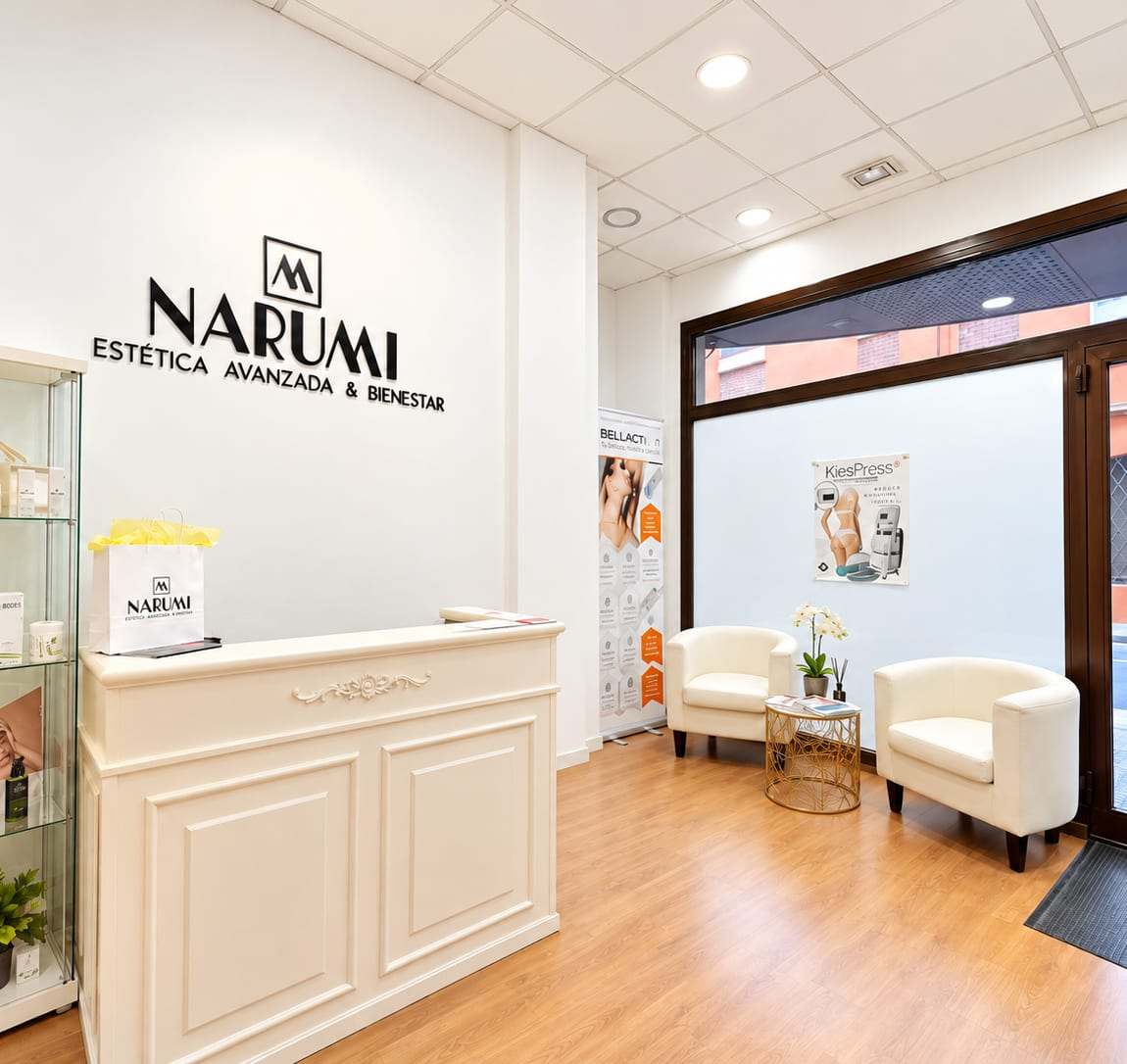
At Narumi, a beauty and aesthetics centre on Calle Cristo de la Epidemia, 33, right in Málaga's Distrito Centro. If you're on foot, we're a short stroll from La Merced, Lagunillas and the historic centre. Before your first peel we assess your skin; book on WhatsApp, by phone or using the form.
How much does a chemical peel cost?
The price table on this page shows a single session, courses of 4 and 8 sessions, and the two facial packs that include a peel. As peels usually work best as a course, a multi-session package tends to be the sensible choice; we'll confirm once we've assessed your skin.
How many chemical peel sessions will I need?
The usual plan is a course of 4 sessions, 2 to 4 weeks apart, so your skin can renew itself in between. For very uneven tone or more marked texture, the course can be extended. After that, a few sessions a year help maintain the results.
Does a chemical peel hurt?
While the product is working you'll feel tingling or warmth, more intense around areas like the sides of the nose. It doesn't last long and we monitor it closely: if it builds more than expected, we remove or neutralise it early. Once we finish, soothing skincare calms the sensation.
Will my skin peel afterwards?
It depends on the product and your skin. With superficial peels you may see no flaking at all, or a fine flaking, like dry skin, between the second and fifth day. It isn't a sign that it worked better or worse. What matters is not picking at it and keeping your skin well moisturised.
Is it the same as a medical peel?
No. At Narumi we only carry out superficial, professional-grade cosmetic peels, which work on the outermost layer of the skin. Medium and deep peels penetrate further and need a longer recovery; they are medical procedures performed by a dermatologist or aesthetic doctor. If your goal needs that level, we'll tell you.
When is the best time of year for a peel in Málaga?
Autumn, winter and early spring are ideal: there are fewer hours of strong sun and it's easier to protect your skin. We don't rule out summer entirely, but it calls for very strict sun protection and no beach; if you have a sunny holiday coming up, it's better to wait.
Will a chemical peel get rid of pigmentation?
It can soften the look of superficial pigmentation, such as some sun spots, and even out your tone over a course of sessions. It doesn't promise to make marks disappear, and melasma or hormonal pigmentation need a doctor's assessment. If a mark has changed shape, colour or size, see your dermatologist before any beauty treatment.
Can I have a peel if I get spots?
If you're blemish-prone but not in the middle of a breakout, a well-chosen peel helps keep pores clear. We don't do it on active inflamed acne with painful spots or cysts: see your dermatologist first. Nor if you are taking, or have recently taken, isotretinoin.
What's the difference between a chemical peel and Dermapen?
A peel resurfaces the skin with acids and is ideal for tone and radiance. Dermapen creates superficial micro-channels that help cosmetic actives absorb, and works better on texture and superficial marks. They are often combined in a plan, as in Pack 2.
Written and reviewed by Marta Fernández · Last reviewed:
Sources: Spanish Academy of Dermatology and Venereology (AEDV): sun protection · AEMPS (Spanish Agency of Medicines and Medical Devices): information on cosmetic products

Shall we talk about what you need?
Tell us what you'd like to improve and we'll recommend the option that genuinely makes sense for you, with a no-obligation initial consultation.
Send a messageWhere to find us
A few minutes' walk from Málaga's historic centre
- Phone and WhatsApp
- 611 500 328
- Opening hours
- By appointment only. Check availability on WhatsApp or by phone.
The Google map only loads if you accept, as Google may use cookies.