Guides · 5 min read
Which Facial Should You Choose for Your Skin Type and Goals?
By Marta Fernández · Updated
Choosing a facial gets complicated when there’s so much on offer: deep-cleansing facials, peels, microneedling, beauty devices, light, massage… The most useful way to make sense of it all is to combine two things: what your skin is like and what matters most to you right now. This guide helps you do just that, so you arrive at your assessment with a clear idea.
First, your skin type
Skin changes with age, the seasons and your habits, but it usually fits one of these profiles:
- Oily: shine across the whole face, visible pores, prone to congestion.
- Combination: shine in the T-zone (forehead, nose and chin) with normal or dry cheeks.
- Dry or dehydrated: a tight feeling, flakiness, a dull look. Dry skin produces little oil; dehydrated skin lacks water and can occur even in oily skin.
- Sensitive or reactive: reddens, itches or stings easily in response to products, heat or cold.
- Mature: less smooth, with expression lines and a loss of firmness; it can also be dry, combination or sensitive.
In Málaga, with heat and humidity for much of the year, many combination skins become oilier in summer and drier with the heating on in winter. That’s why the treatment that suits you in July isn’t always the one you need in January.
Next, your main goal
Pick one, even if you want several things. A good plan has one main technique and one or two add-ons.
Pores and congestion
If you notice clogged pores, blackheads or shiny skin, the foundation is a regular deep-cleansing facial, which cleanses thoroughly, extracts impurities and rebalances. Diamond microdermabrasion, a mechanical exfoliation, refines the surface and works as an add-on or a quick session.
Texture, marks and tone
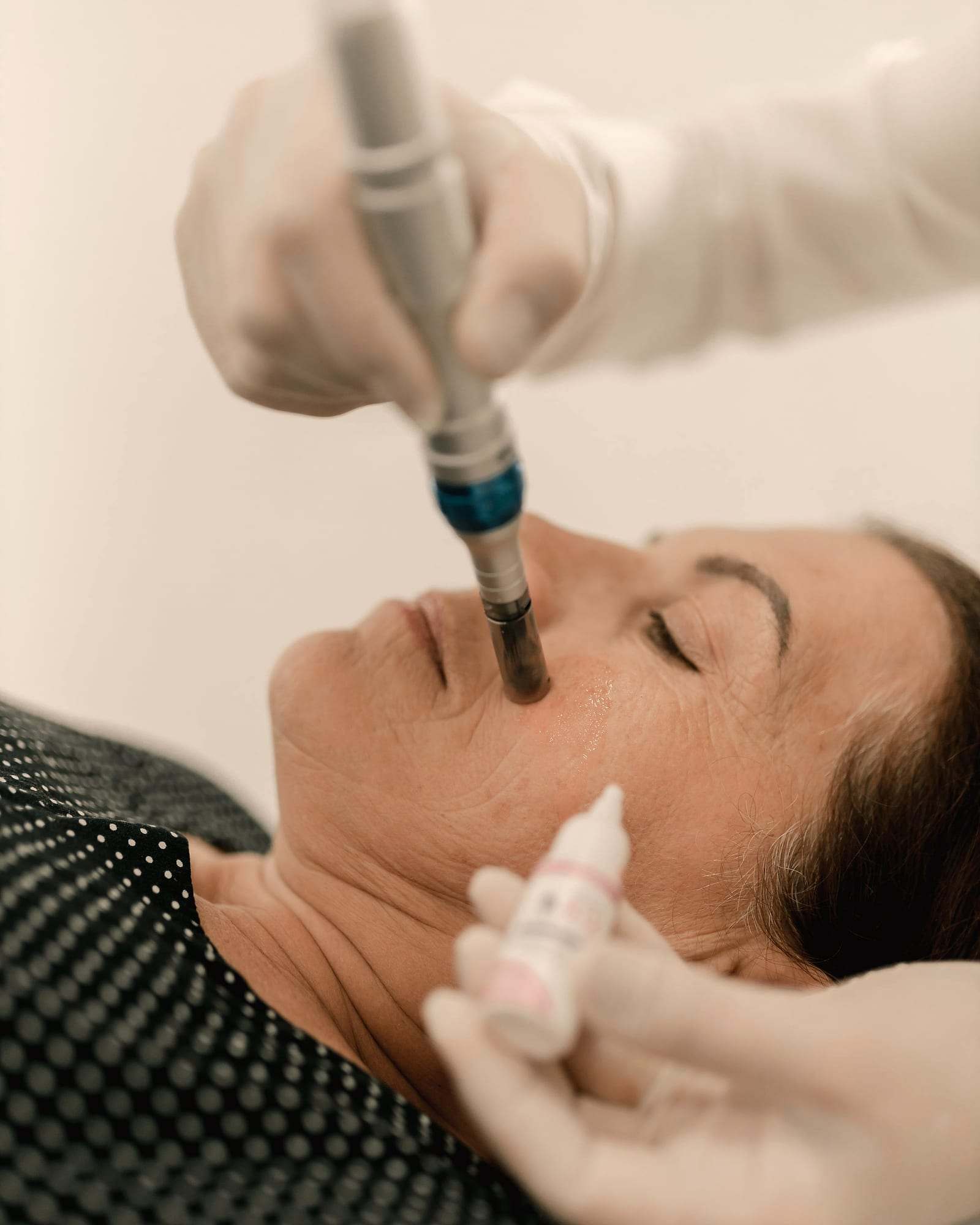
For skin with an uneven texture, superficial marks or a dull tone, the two main options are a chemical peel, which renews the surface with acids chosen to suit your skin, and Dermapen, a cosmetic microneedling treatment that works on texture using fine needles. A peel is usually the first step; Dermapen makes sense when you want to work on texture more intensively. Both are done as courses and call for diligent sun protection.
Radiance and hydration
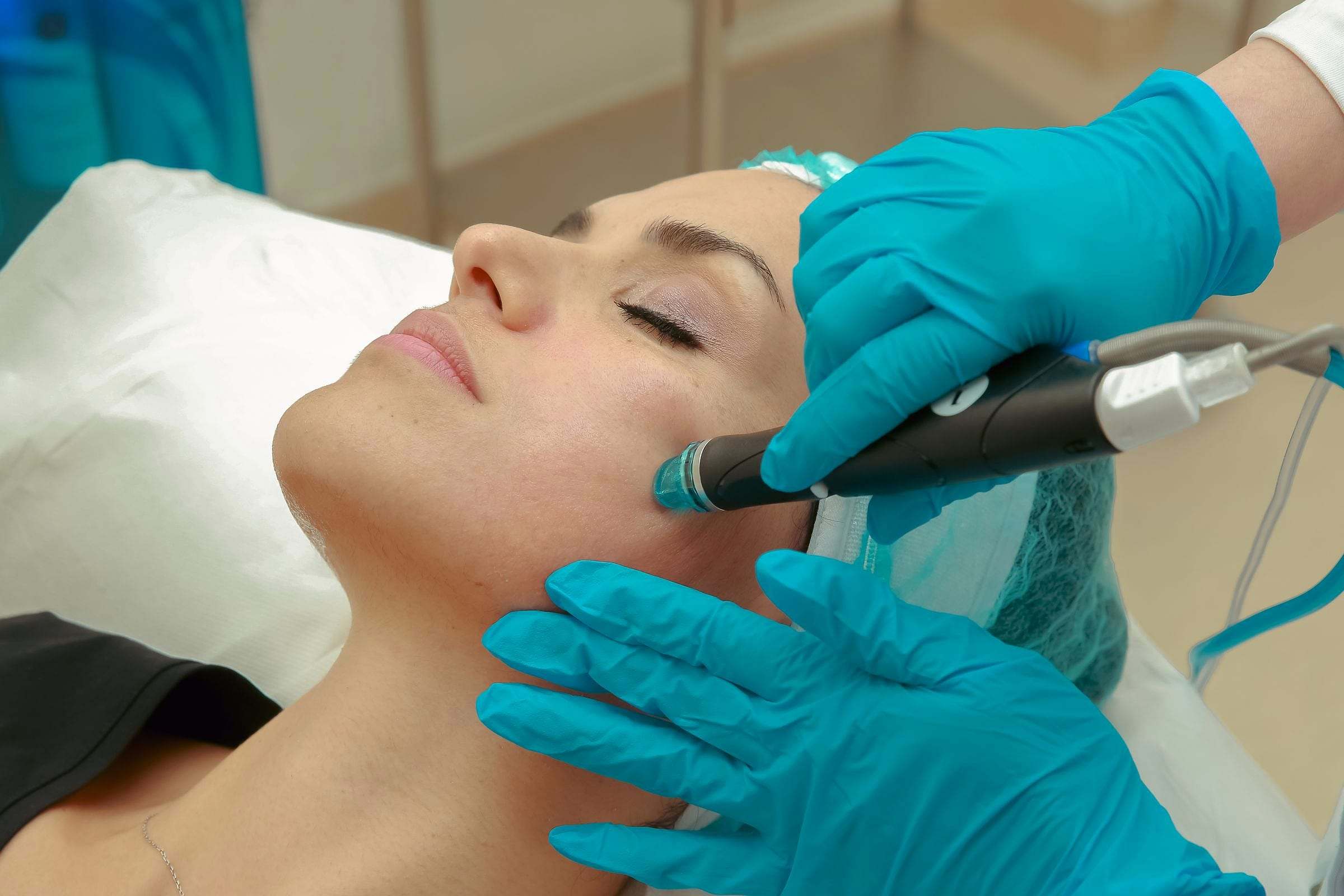
If your skin is dull, dehydrated or simply tired, the hydrotherapy facial combines cleansing, gentle exfoliation and hydration in a single session, with no redness. The LED light facial is a gentle add-on for radiance and calm, ideal at the end of another facial.
Firmness
When you start to notice your skin is less smooth or your jawline less defined, the radiofrequency facial works with controlled warmth over a course of sessions and is designed for the look of firmness. The Bellaction Duo facial is a complete firming session, with a visible tightening effect by the end. If sagging is marked or there’s volume loss, beauty treatments have limits that are worth knowing about.
Eyes and lips
The skin around the eyes and on the lips is thinner and has its own needs. For tired-looking eyes, fine lines or puffiness, there’s our eye contour treatment, with Eye Lift or eye pressotherapy (neither works on fat-related bags or vascular dark circles); for dry or chapped lips, there’s injection-free lip hydration. Both are good add-ons to any facial plan.
Relaxation
Sometimes the goal is simply to switch off and leave looking well. Kobido, a hands-only Japanese facial massage, relaxes your expression and brings radiance. It suits every skin type, with the pressure adapted.
Matching skin and goal
The table on this page sums up the most common combinations. A few rules to round it off:
- Sensitive skin: always start gently (hydrotherapy, LED light, Kobido) and save more active techniques until we know how your skin responds.
- Oily skin with visible pores: regular deep-cleansing facials make more difference than any one-off treatment.
- Mature skin: combine a firming technique with a texture treatment, but not in the same week.
- Summer: prioritise techniques that don’t sensitise the surface; save stronger peels for autumn and winter.
Three example plans
To show how all this works in practice, here are three cases we see often in the treatment room:
- Combination skin, early thirties, with visible pores and summer shine. A deep-cleansing facial every four to six weeks, diamond microdermabrasion in between if the texture calls for it, and occasional LED light. In autumn, a course of chemical peels to refine the surface.
- Dry skin, mid-forties, dull and showing first lines. A hydrotherapy facial to restore comfort and radiance, followed by a course of radiofrequency facials. Kobido for maintenance and a moment of rest, plus eye contour care if the eyes look tired.
- Sensitive skin that reacts to almost everything. First, simplify the routine at home. Then gentle sessions (hydrotherapy with soothing actives, LED light) and, only once the skin is stable, consider something more active.
These are examples, not prescriptions. The same age and skin type can call for different plans depending on habits, medication or how much time you can commit.
Common mistakes when choosing
- Following trends. The treatment everyone’s talking about may not be the one your skin needs.
- Wanting everything at once. Piling up techniques with no plan irritates the skin and makes it hard to tell what’s working.
- Forgetting your routine. No facial makes up for skipping gentle cleansing, moisturising and daily sunscreen.
- Expecting change in one session. Most texture and firmness treatments work as courses.
- Ignoring medical signs. Inflamed acne, rosacea or a changing mark are matters for a dermatologist.
At Narumi
At Narumi, in Málaga city centre, every plan starts with an assessment by Marta Fernández, who looks at your skin, your habits and what you’re after, and suggests a main technique with its add-ons. You might start with a deep-cleansing facial, a chemical peel, a hydrotherapy facial or, if firmness is your goal, the radiofrequency facial. If you’re torn between two texture treatments, read our comparison Dermapen or chemical peel, and if light is more your thing, our guide to LED light facials.
| Your skin | If you want… | Start with | As an add-on |
|---|---|---|---|
| Oily or combination | Clearer pores and less shine | Deep-cleansing facial | Diamond microdermabrasion or LED light facial |
| Oily or combination | Finer texture | Chemical peel | Regular deep-cleansing facials |
| Dry or dehydrated | Comfort and radiance | Hydrotherapy facial | LED light facial or Kobido |
| Normal but dull | A quick glow | Hydrotherapy facial or diamond microdermabrasion | LED light facial |
| Marks or uneven texture | A smoother surface | Dermapen or chemical peel | LED light after the session |
| Mature or losing its bounce | A firmer look | Radiofrequency facial or Bellaction Duo facial | Kobido and eye contour care |
| Sensitive or reactive | Calm and comfort | Gentle hydrotherapy facial or LED light facial | Kobido with adapted pressure |
| Any | Relaxation and radiance | Kobido | LED light facial |
Frequently asked questions
How do I know my skin type?
Wash your face with a gentle cleanser and don't apply anything for an hour. If your whole face is shiny, it's oily; if only the T-zone (forehead, nose and chin) shines, it's combination; if it feels tight or flaky, it's dry; if it reddens or itches easily, it's sensitive. It's a rough guide: an assessment in the treatment room will fine-tune it.
Can I have several facials at once?
Some combine very well in the same session, such as a deep-cleansing facial followed by LED light. Others are best spaced out, such as a chemical peel and Dermapen, or a peel and radiofrequency. The sensible approach is to follow a plan with one main technique and one or two add-ons.
Which facial is best before an event?
Ones that leave no redness or flaking: a hydrotherapy facial, the Bellaction Duo facial, Kobido or an LED light facial, one to three days beforehand. Avoid trying a chemical peel or Dermapen for the first time just before an important date.
How often should I have a facial?
It depends on the treatment: a deep-cleansing facial is usually repeated every four to eight weeks depending on your skin; texture and firmness treatments are done as courses with a fixed interval; Kobido and LED light, whenever you fancy. Consistency and your daily routine matter more than frequency.
What should I do if I have acne or marks that are changing?
If you have inflamed acne, rosacea or a mark or mole that's changing, your first step is your dermatologist. A beauty salon doesn't treat those conditions. Once they're under control, we can support your skin with suitable beauty care.