Guides · 5 min read
LED Light Facials: What Each Colour Does and What to Really Expect
By Marta Fernández · Updated
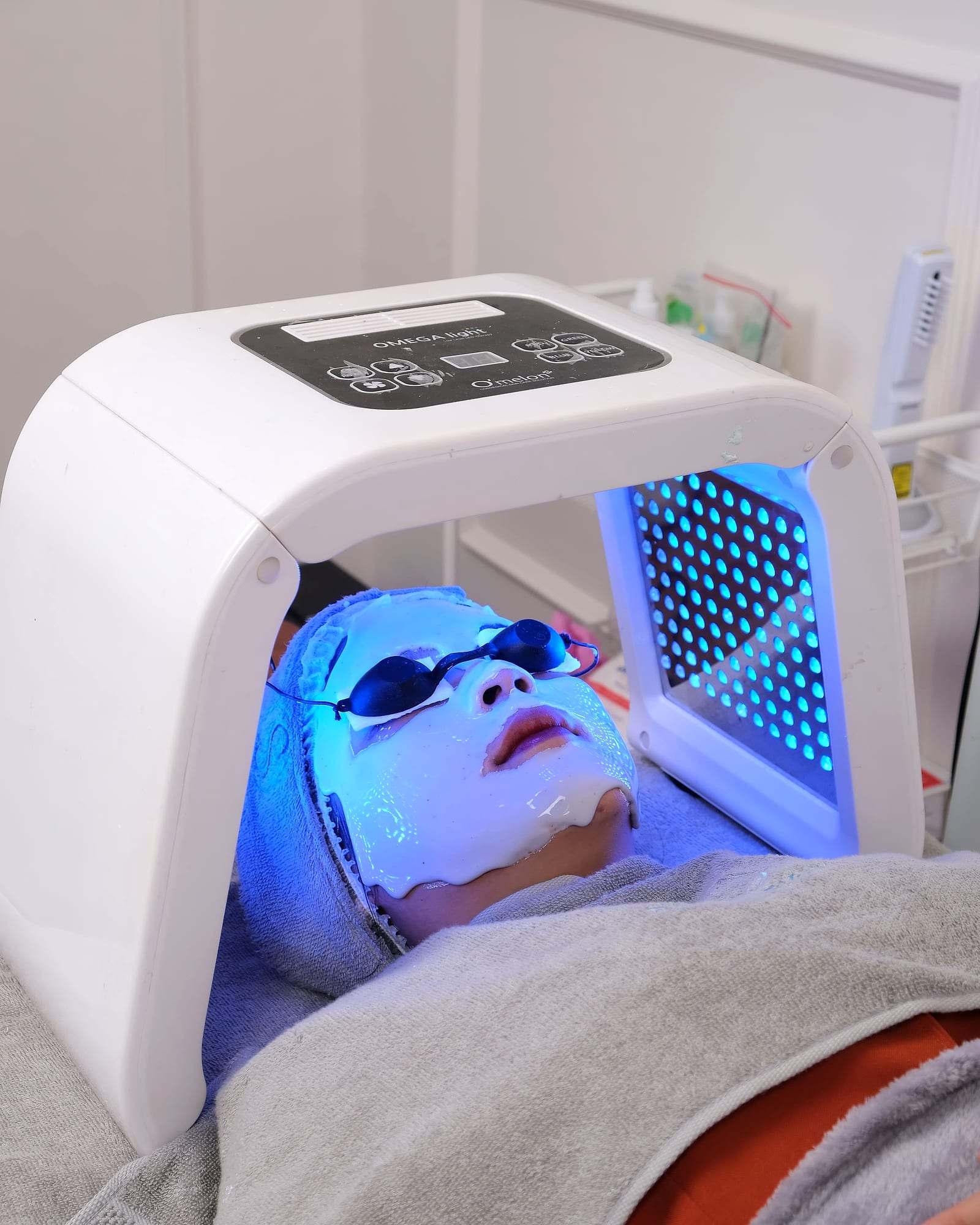
LED light has found its way into beauty routines: at-home masks, panels in treatment rooms, social media photos of faces glowing red or blue. Behind it all is a simple idea and a fair few exaggerated promises. This guide separates one from the other, so you know what you can really expect from an LED facial at a beauty salon.
What an LED light facial is
LED stands for light-emitting diode. An LED facial mask or panel brings together lots of diodes that emit light of a particular colour (or several) at low intensity, for a set length of time. It isn’t a laser: it doesn’t focus energy on a single point, it isn’t designed to destroy anything and it barely produces any heat. Nor is it the intense pulsed light (IPL) used for hair removal, which works with powerful flashes.
Research into how light influences skin cells comes under the name photobiomodulation. It’s an evolving field, with some interesting findings and some more modest ones, and many studies use devices and protocols that don’t always match those found in a beauty salon. So rather than quoting laboratory percentages, we prefer to talk about what we see in practice: brighter-looking skin, a sense of calm and a pleasant session that complements other treatments well.
What each colour does (in cosmetic use)
Each colour of light reaches a different depth and is associated with different uses. The table on this page sums it up; here’s the context.
Red light
The most widely used and most versatile colour. In beauty treatments it’s associated with calmer skin and a brighter, more even look. It works particularly well as the finishing step of a more active facial, such as a deep cleanse or a peel, when the skin is receptive and slightly sensitised. Some devices combine red with near-infrared, which is invisible to the eye.
Blue light
Associated with oilier, shinier skin. It’s worth being clear here: acne, especially inflamed acne, is a skin condition and should be assessed by a dermatologist. In a beauty salon, blue light can support the upkeep of oily skin when there’s no breakout, but never replace its treatment.
Amber, yellow and green light
Lesser-known colours associated with a more even tone and with reactive skin. On their own, they bring subtle changes; they make more sense as part of a routine or combined with other facials.
What it can and can’t do
It’s worth setting your expectations before you book.
What you can reasonably expect:
- Brighter, more rested-looking skin, especially after a course.
- A feeling of calm after techniques that sensitise the skin, such as a peel.
- A moment’s pause: twenty minutes lying down, with no noise and no heat.
What cosmetic LED light doesn’t do:
- It doesn’t erase pigmentation, deep wrinkles or scars.
- It doesn’t treat acne, rosacea or other conditions: that’s a job for dermatology.
- It won’t noticeably firm the skin if sagging is already visible; there are options with more to offer for that.
- It doesn’t replace sunscreen or a sensible routine.
If anyone promises you that an LED mask will take years off you or solve a skin problem on its own, be wary. Cosmetic LED light is a good add-on, not a miracle treatment.
When to avoid it
Although it’s one of the gentlest techniques around, there are situations in which we won’t carry it out:
- If you take photosensitising medication (some antibiotics, oral isotretinoin or certain diuretics, among others) or have known photosensitivity.
- If you have epilepsy or sensitivity to flashing light.
- If you have an eye condition or are undergoing eye treatment, unless your doctor has given the go-ahead.
- During pregnancy, we prefer not to carry it out.
- If you have a lesion, mole or mark that has changed: see your dermatologist first.
At-home LED mask or in the salon?
At-home masks have made LED light popular, and they can help you stay consistent. There are three differences from a salon session. First, power and panel size vary a great deal between devices. Second, at home nobody checks your medication or chooses the colour to suit your skin. And third, in the salon the light is part of a facial: it reaches clean, prepared skin, often after another technique.
If you already have a mask at home, there’s no need to stop using it. Bring it to your appointment or tell us which model it is, and we’ll advise you on how to fit it around what we do in the salon, without overdoing it.
How it fits into a facial routine
LED light gives its best when it’s part of a plan. Some common examples:
- Dull skin: a deep-cleansing or hydrotherapy facial, finished with a few minutes of red light.
- Oily skin with no breakout: maintenance with regular facials and occasional blue light.
- After a peel or Dermapen: red light as a calm finish, when your assessment allows.
- Pure wellbeing: a short session before a facial massage, for anyone wanting to switch off.
What we don’t recommend is using it as a substitute for the basics: if your skin is dehydrated or irritated by too many products, light won’t make up for that imbalance. Whatever the plan, daily sunscreen remains the single most effective step for how your skin looks in the long term.
At Narumi
At Narumi, in Málaga city centre, we use the LED light facial as an add-on and as a calming session. Marta Fernández checks your medication and light sensitivity first, chooses the colour to suit what you’re after and protects your eyes throughout the session. Most often it’s added at the end of a deep-cleansing facial or a chemical peel, or combined with a hydrotherapy facial when radiance is the goal. If you’re not sure where to start, our guide on which facial to choose for your skin type will help you sort through the options.
| Colour | Usual cosmetic use | Good for | Watch out for |
|---|---|---|---|
| Red | Calm and radiance | Dull skin, after a peel or a deep-cleansing facial | Expecting an "anti-ageing" fix: it's an add-on |
| Blue | Oilier skin | Maintenance for combination or oily skin | Inflamed acne: that's one for your dermatologist |
| Amber / yellow | Evenness and reactive skin | Sensitive skin and uneven tone | Marked pigmentation: it won't erase it |
| Green | Even skin tone | Dull or uneven-toned skin | Little visible difference when used on its own |
| Near-infrared | Often combined with red | Calming sessions after other facials | Not every device includes it |
Frequently asked questions
Which LED colour is the most effective?
No colour is better than another in the abstract: it depends on what you're looking for and how your skin is that day. Red is the most versatile and the one we use most as an add-on; blue makes sense for oily skin; amber for reactive skin. What matters is choosing well and being reasonably consistent.
How often should I have an LED facial?
Once or twice a week during a course of 4 to 8 sessions is a sensible pace, followed by occasional top-ups. More isn't better: cosmetic LED light doesn't build up like a medicine, and having it every day in the salon brings no extra benefit.
Is LED light safe for the eyes?
The light is low-intensity, but staring at bright panels for minutes on end isn't a good idea. That's why eye protection is always used in the treatment room. If you have an eye condition or are undergoing eye treatment, check with your ophthalmologist first.
Can it cause pigmentation?
Visible LED light doesn't tan or burn the skin like the sun. The risk arises if you take photosensitising medication or have photosensitivity, in which case we don't carry it out. Keep wearing sunscreen every day, as usual.
Is LED light useful after a peel or Dermapen?
It's one of its best uses. After a more active facial, a session of red light helps the skin settle and makes the end of the session more pleasant. At your assessment we decide whether it's best on the same day or at your next visit.