Guides · 5 min read
Diode laser hair removal: how many sessions, your skin type and aftercare
By Marta Fernández · Updated
Before starting a course of laser hair removal, almost everyone asks the same three questions: how many sessions will I need, will it work on my skin and hair, and what do I need to do (and stop doing) between sessions? This guide answers all three based on what we see in the treatment room, without promises.
How many sessions you need, and what it depends on
The honest answer is a range: 6 to 10 sessions for most areas, with some needing more. The reason lies in how hair grows. Each follicle cycles through a growth phase, a transition phase and a resting phase, and in any given area only part of the hair is growing at the same time. The laser works on that growing hair, because it’s attached to the root and holds the most pigment. The rest has to wait for the next session.
The final number depends on several factors:
- The area. Hair on the underarms, bikini line and legs usually responds sooner than on the face or a man’s back.
- The colour and thickness of the hair. The darker and coarser it is, the more energy it absorbs and the better it responds.
- Your skin type. The more contrast between hair and skin, the more leeway there is.
- Hormones. Hormonal hair (chin, neck or stomach in women; back and shoulders in men) tends to renew itself and needs more sessions and top-ups.
- Consistency. Sticking to the intervals and not pulling hair out between sessions matters more than you might think.
Approximate intervals by area
| Area | Interval | Approximate sessions |
|---|---|---|
| Upper lip, chin, sideburns | 4–6 weeks | 8–12 |
| Underarms | 6–8 weeks | 6–8 |
| Bikini line and pubic area | 6–8 weeks | 6–8 |
| Legs and arms | 8–10 weeks | 6–8 |
| Back, chest and stomach (men) | 6–10 weeks | 8–10 |
As the course progresses, hair takes longer to come back and the intervals get longer. Once it’s finished, one or two top-up sessions a year are usual, depending on the person.
What your skin type is and why it matters
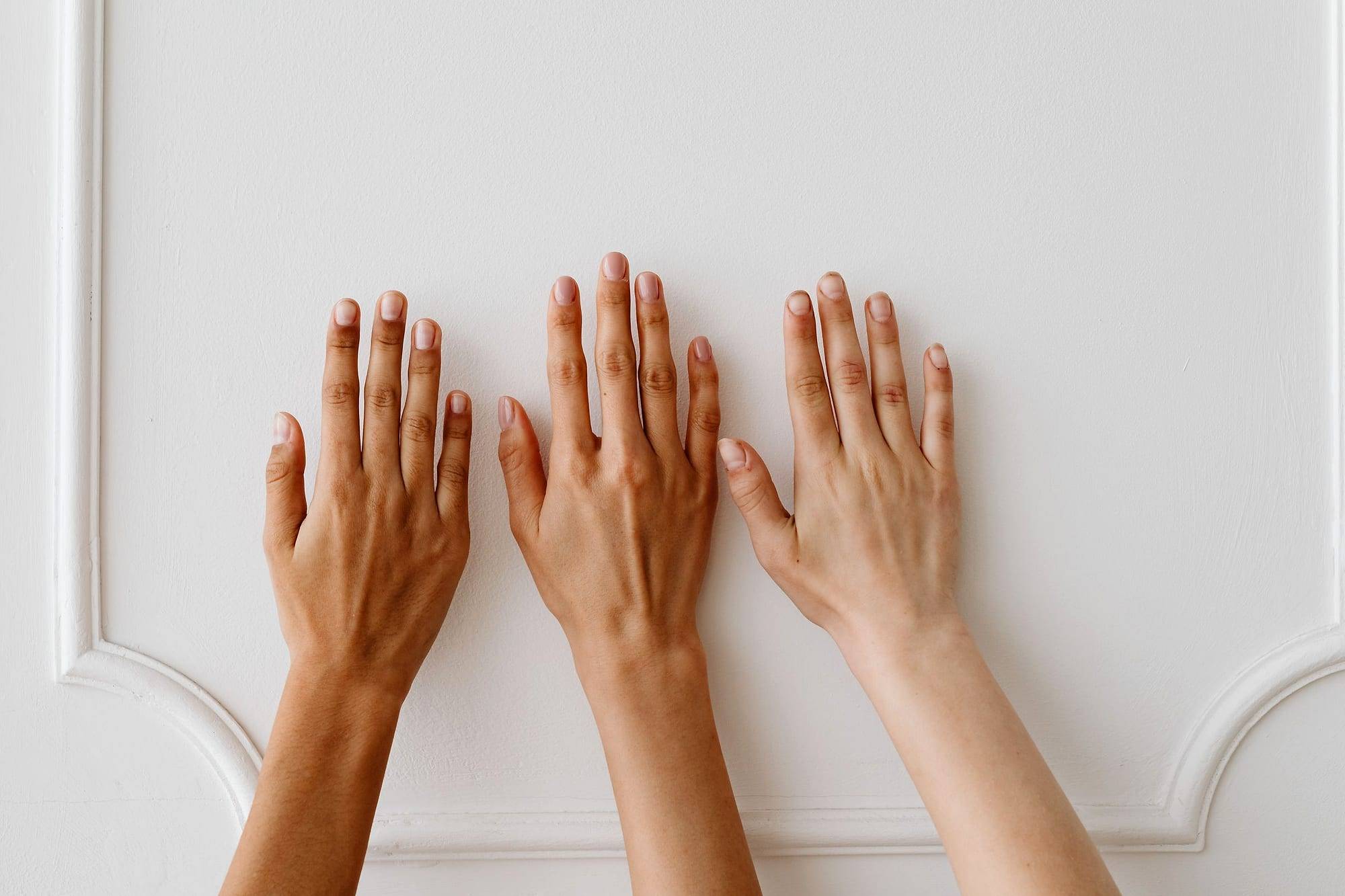
Skin type is a way of classifying skin by how it reacts to the sun. The most widely used scale, the Fitzpatrick scale, runs from type I (very fair skin that always burns) to type VI (very dark skin that never burns). You’ll find a summary of all six in the table in this guide.
Skin type matters for laser because the melanin in your skin also absorbs light. If the skin has a lot of pigment, some of the energy meant for the hair stays in the skin. In practice, that doesn’t mean darker skin can’t be treated: it means the energy and pulse duration need adjusting. The diode is one of the technologies that allows this best, and the contact cooling of the sapphire tip protects the surface of the skin.
One thing changes anyone’s “practical” skin type: a tan. Type III skin fresh back from the beach behaves, as far as the laser is concerned, like considerably darker skin. That’s why recent sun exposure is a reason to postpone, even if your skin is fair.
Hair colour matters as much as skin
The laser needs dark pigment in the hair to turn light into heat. That explains its limits:
- Black or dark brown hair: responds best, on any treatable skin type.
- Light brown hair: responds, often with a session or two more.
- Light blonde and red hair: poor or uneven response; assessed case by case.
- White or grey hair: practically no response, because it has no pigment.
- Fine fuzz: responds poorly and, in some areas such as the cheeks or neck, heat can stimulate it; so it isn’t treated.
If your hair falls into the last groups, the responsible thing is to tell you before you start.
Preparing for each session
Preparation starts weeks before your first appointment:
- No waxing, tweezing, threading or epilators once you decide to start. They pull out the root the laser needs. Shaving is fine.
- No direct sun, sunbeds or fake tan in the 15 days before each session.
- Shave the area the day before, with a clean razor and in the direction of growth.
- Tell us about any new medication, especially antibiotics, isotretinoin or St John’s wort, and stop retinoids and exfoliating acids on the area a few days beforehand.
- Come without creams, deodorant or make-up on the area being treated.
- Don’t bleach the hair. Without pigment, the laser barely works.
Aftercare after each session
Freshly treated skin is warm and a little sensitive for a few hours. To help it settle without problems:
- A soothing moisturiser or aloe vera that evening.
- 24–48 hours without sauna, steam room, very hot water, chlorinated pools or intense exercise.
- No perfume, alcohol-based deodorant or scrubs on the area for 48 hours.
- 15 days with no direct sun or fake tan; SPF 50 on any uncovered areas.
- One to three weeks later, the treated hair starts to shed. From day three, gentle exfoliation helps.
Redness and small bumps around each follicle for a few hours are the normal reaction. A blister, scab or mark is not: if one appears, message us so we can check it and, if it doesn’t improve, see your doctor.
At Narumi
At Narumi Estética Avanzada & Bienestar, on Calle Cristo de la Epidemia in Málaga city centre, we work with a diode laser fitted with a cooled sapphire tip. Marta Fernández, an advanced aesthetics specialist with over 15 years’ experience, assesses your skin type and hair before you start and adjusts the plan session by session. If your hair isn’t going to respond, we’ll tell you.
- Laser hair removal in Málaga: how we work, areas, packages and prices.
- Bikini line laser
- Underarm laser
- Leg laser
And if you’re weighing up technologies, read our comparison diode vs IPL vs alexandrite.
| Skin type | What the skin is like | How it reacts to the sun | What it means for laser |
|---|---|---|---|
| I | Very fair, often freckled; blonde or red hair | Always burns, never tans | The skin tolerates laser well; the limit is usually the hair colour |
| II | Fair | Burns easily, tans minimally | Good contrast if the hair is dark |
| III | Fair to medium | Sometimes burns, tans gradually | A very common profile in Málaga; good response with dark hair |
| IV | Medium, olive tone | Rarely burns, tans easily | Responds well to the diode; extra care with tanning |
| V | Dark | Very rarely burns | Treated with more cautious settings and sometimes a patch test |
| VI | Very dark | Never burns | Possible with the diode and conservative settings; assessed case by case |
Frequently asked questions
How do I know my skin type?
Think about how your skin reacts to the first sun of the year without sunscreen: if you always burn and never tan, you're at the lower end of the scale; if you hardly ever burn and tan easily, you're at the upper end. Your natural eye and hair colour are also a guide. At your initial consultation we confirm it by looking at your skin somewhere that doesn't usually see the sun.
Why does the hair seem to keep growing after a session?
Because the treated hair doesn't fall out straight away. Over one to three weeks it works its way up to the surface, already detached from the root, and looks as if it's growing. Then it sheds on its own or with gentle exfoliation. It isn't a sign that the session has failed: it's a normal part of the laser process.
Can I have laser if I take the pill or other medication?
Hormonal contraceptives don't rule out laser, although hormones affect hair and may lengthen the course. What matters is that you tell us about any medication, especially antibiotics, topical anti-inflammatories, isotretinoin or St John's wort, because some increase the skin's sensitivity to light. If in doubt, ask your doctor or pharmacist before the session.
What should I do if I get a blister or scab after a session?
It's not usual, but it can happen, especially if the skin was slightly tanned. Don't pop or pick it; keep the area clean, apply a repairing cream and protect it from the sun. Message us so we can take a look and adjust the next session. If it becomes infected, is very painful or doesn't improve within a few days, see your doctor.
Is there any point in having sessions closer together to finish sooner?
No. The laser only works on hair that's in its growth phase at the time of the session. If you bring the appointment forward, you'll mostly find hair that's already been treated or follicles at rest, so you use up a session with little effect. Sticking to the interval for each area is the quickest way to finish.