Guides · 5 min read
Laser hair removal in summer: planning around the Málaga sun
By Marta Fernández · Updated
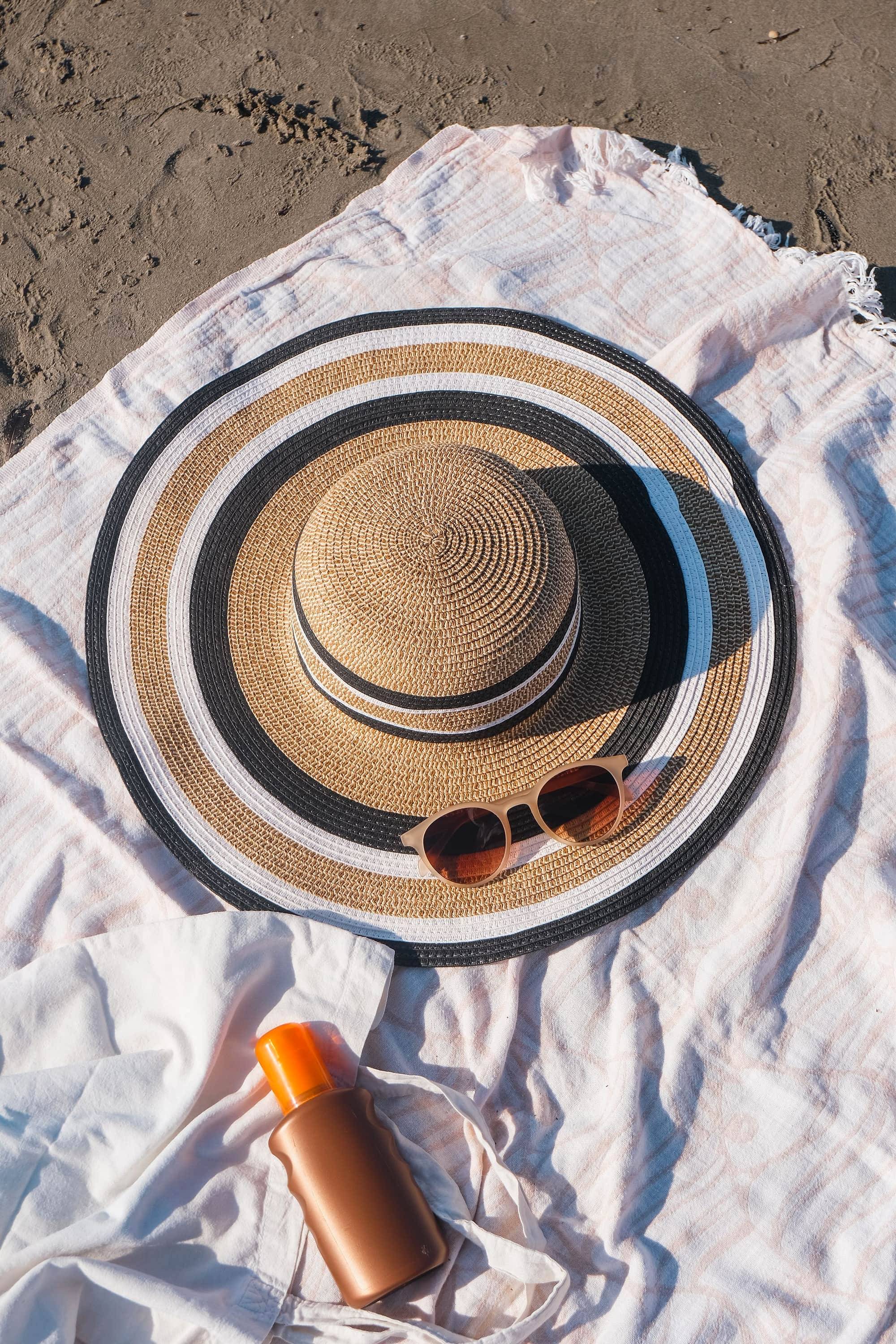
Málaga has sunshine almost all year and the beach a short stroll away. For laser hair removal, that’s both an advantage (the urge to stop shaving kicks in early) and a challenge, because the sun is the main reason for postponing a session. This guide explains why, which areas you can keep treating in summer and how to plan your calendar so the work is done by beach season.
Why sun and laser don’t mix
The laser works by heating the pigment in the hair. But skin has pigment too, and when it tans it has more. Tanned skin competes with the hair for the energy: it absorbs some of the light meant for the follicle and heats up more than it should. That has two consequences:
- A higher risk of reactions: superficial burns, blisters or marks, lighter or darker, that can take months to fade.
- Less effectiveness: to protect the skin the energy has to be lowered, so the session achieves less.
It works the other way round too. Straight after a session the skin is more sensitive, and strong sun in those days can leave marks. Hence the rule of 15 days before and after each session.
Fake tan falls into the same category: it stains the surface of the skin and makes it absorb more light. And some medicines and products, such as certain antibiotics, isotretinoin, St John’s wort or some perfumes and citrus on the skin, increase sensitivity to the sun. In summer they deserve a closer look.
The Málaga sun isn’t just an August thing
In Málaga, the UV index is high for much of spring and summer, and on clear autumn and winter days it’s still enough to tan your face or arms without you noticing. Terrace lunches, walks along the port or a morning on the beach in October all count. So sun protection isn’t a July rule but one for your whole course, especially on areas that are uncovered: face, neck, décolletage, hands and, in summer, legs and arms.
Which areas you can keep treating in summer
The rule is simple: an area can be treated if it isn’t tanned and won’t be in the following 15 days. In practice, in Málaga that splits the body into two groups (see the table in this guide for details):
- Areas that are usually covered: underarms, bikini line and pubic area. With swimwear that covers well and a little care, you can keep up your session rhythm all summer.
- Exposed areas: legs, arms, back, shoulders and face. If you’re going to the beach or spending a lot of time outdoors, the sensible thing is to pause them or space sessions out and pick up again in autumn.
The face is a special case: you can’t cover it completely, but with SPF 50 every day, a cap or sun hat and no deliberate sunbathing, many people can keep treating it.
A calendar to be ready for summer
If your goal is a summer without thinking about hair removal, plan backwards from June:
| When | What to do |
|---|---|
| September–October | Let your summer tan fade and have your initial consultation |
| October–December | First session, then the next ones according to each area’s interval |
| January–March | Make progress without worrying about the sun; sunscreen on face and hands |
| April–May | Last sessions on exposed areas before the beach; watch out for the first warm days |
| June–August | Keep up underarms and bikini line; pause or space out legs, arms and back |
| September | Restart paused areas once the tan has faded |
With this calendar, on areas such as the legs, with sessions every 8–10 weeks, you reach June with four or five sessions done. That’s a good part of the plan, though not all of it: the following summer will be easier still.
Trips count just as much as summer. If you have a sunny break over Easter or a long weekend at the beach, let us know when you book: we’ll move sessions for exposed areas so they don’t fall in the 15 days before or after, and bring forward the covered ones.
If you’re already tanned
No problem, you just need to wait. Leave at least 15 days since your last sun exposure and, above all, wait for the tan to fade. A simple way to check is to compare the area with one that never sees the sun, such as the inside of your arm. If the difference is marked, it’s still too soon. At your appointment we check your skin and, if an area isn’t ready, we treat only the ones that are.
While you wait, use a razor only. If you go back to waxing in summer for convenience, in autumn you’ll be starting almost from scratch, because wax pulls out exactly the root the laser needs.
Summer care between sessions
- Broad-spectrum SPF 50 on every treated area that’s uncovered, reapplied every two hours and after every swim.
- Light long-sleeved clothing or a sarong in the middle of the day if you’ve just had a session.
- 48 hours without chlorinated pools, salt water or sand on freshly treated skin.
- Plenty of moisturiser: treated skin exposed to heat dries out more.
- No fake tan on the areas being treated.
At Narumi
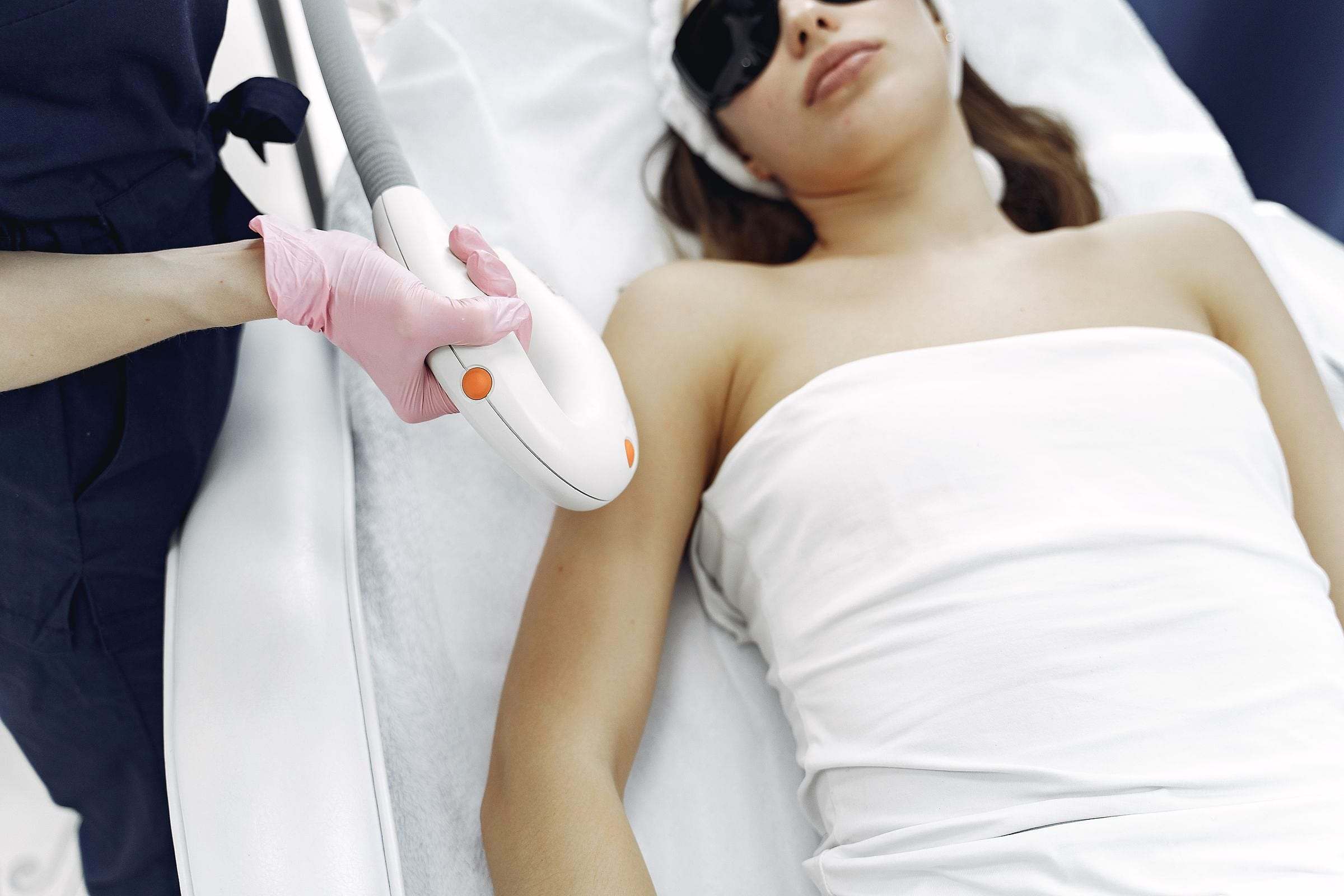
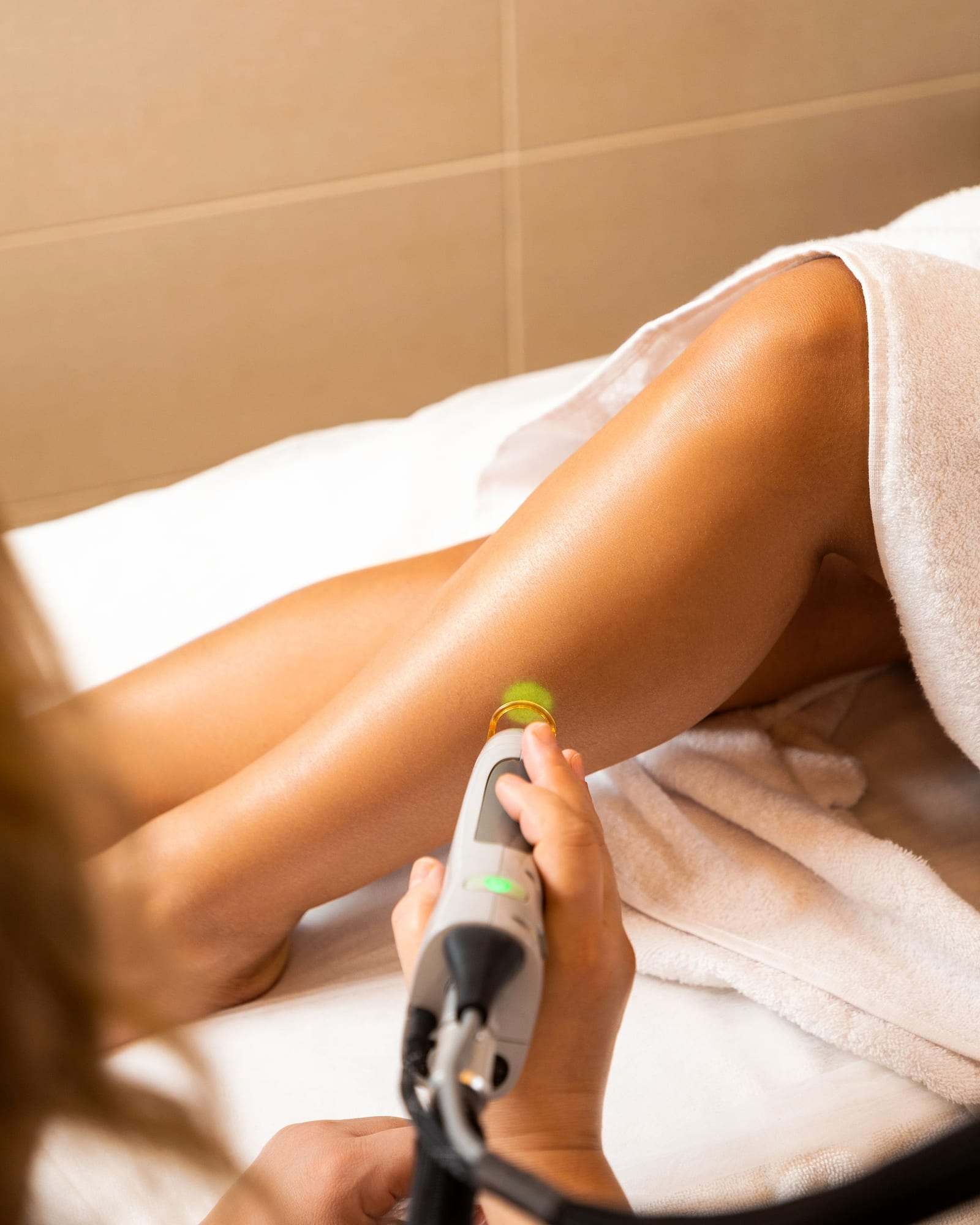
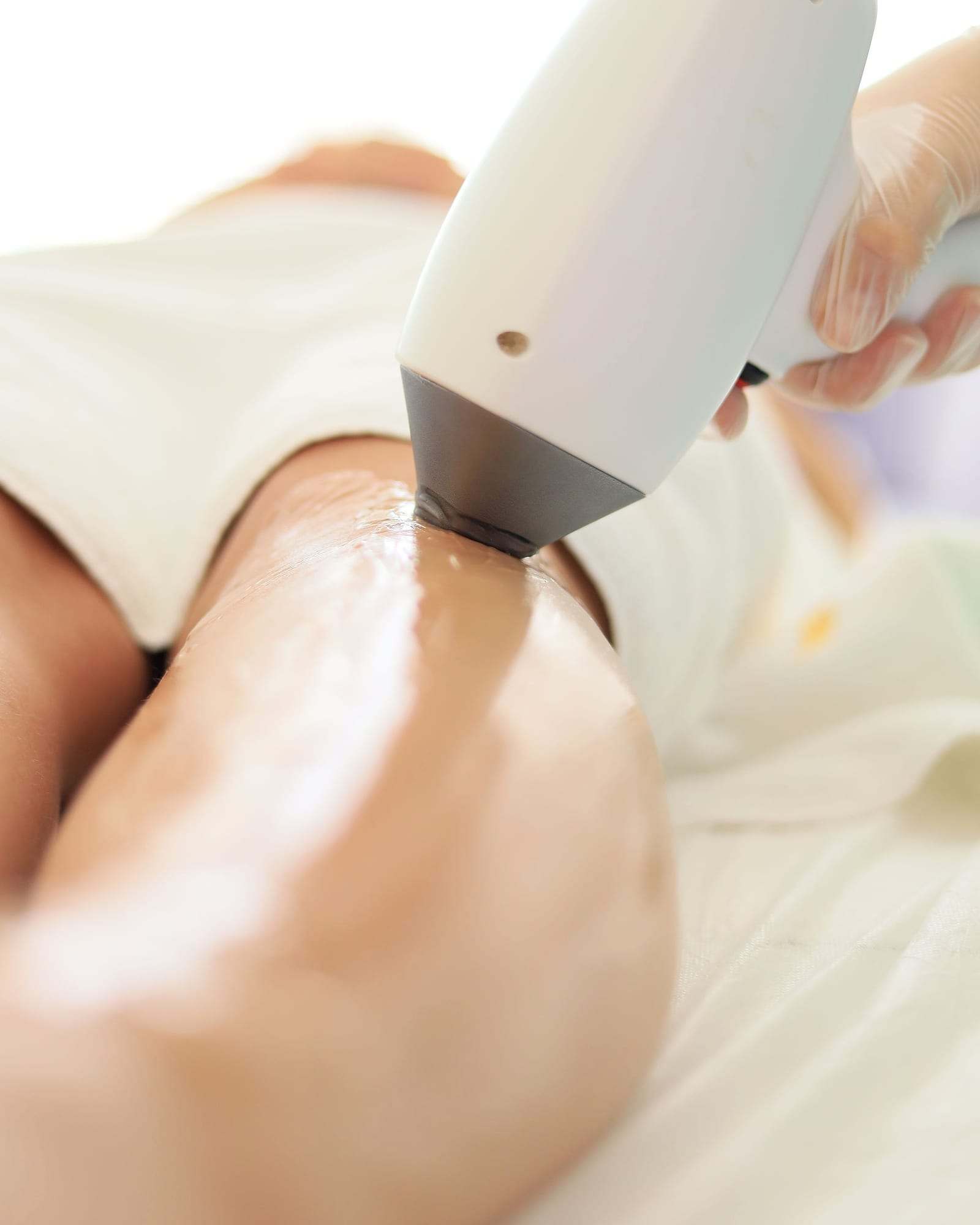
At Narumi Estética Avanzada & Bienestar, on Calle Cristo de la Epidemia in Málaga city centre, a few minutes from La Victoria and El Ejido, we plan your laser calendar with you around your holidays, your skin and the areas you want ready. Marta Fernández works with a diode laser fitted with a cooled sapphire tip and checks your skin at every appointment before treating.
- Laser hair removal in Málaga: how we work, areas, packages and prices.
- Leg laser: the area most often planned with summer in mind.
- Bikini line laser and underarm laser: the ones you can keep up in summer.
- Full body: to organise the whole year in one go.
| Area | Can it be treated in summer? | Condition |
|---|---|---|
| Underarms | Yes, usually | As long as they're not tanned; gentle deodorant after the session |
| Bikini line and pubic area | Yes, usually | Swimwear that covers well and sunscreen along the edges |
| Legs | With care, or paused | Only if they haven't been in the sun and won't be for 15 days |
| Arms | With care, or paused | Same as legs; light long sleeves help |
| Face | With care | SPF 50 every day and no tan; a cap or sun hat |
| Back and shoulders | Best paused if you're going to the beach | The area that burns most without you noticing |
Frequently asked questions
How many days should I wait before sunbathing after laser?
As a general rule, 15 days without direct sun on the treated area, and the same before your next session. Putting on sunscreen and lying out isn't enough: sunscreen reduces tanning but doesn't prevent it. If you'll be outdoors during those days, cover the area with clothing and use SPF 50 on whatever is left exposed.
I'm tanned. How long do I need to wait to restart laser?
Until the tan has clearly faded, and no less than 15 days since your last sun exposure. For skin that tans deeply, it can be several weeks. Compare the area with one that never sees the sun: if there's a marked difference in colour, it's still too soon. At your appointment we check your skin and, if it isn't ready, we postpone that area and treat the rest.
Can I use fake tan during my course?
Best not on the areas you're having treated, and never in the 15 days before a session. Fake tan stains the outer layer of the skin, and that colour can absorb some of the laser light and heat the skin more than it should. If you want to use it in summer, do so on areas you're not treating or during your break.
Can I swim in the sea or a pool after a session?
Wait 48 hours: chlorine and salt can irritate freshly treated skin, and sand can rub it. After that you can swim as normal, but remember that at the beach the sun is the real problem. If you go, cover the treated area, use SPF 50 and avoid the middle of the day.
Is it worth starting laser in spring?
Yes, you'll always make progress. What's worth knowing is that you'll reach summer with two or three sessions done, not with the plan well advanced, and that in summer you'll need to pause or space out the exposed areas. If you're aiming for a particular summer, the ideal time to start is the autumn before.