Guides · 5 min read
Wood therapy or pressotherapy: the differences and which to choose
By Marta Fernández · Updated
Wood therapy and pressotherapy turn up side by side on almost every body treatment menu, often with the same promises attached. But they have very little in common. One is an intense hands-on massage; the other, gentle mechanical pressure. One works on the skin; the other aims for a draining effect. Understanding that difference is the simplest way to avoid spending money on something you don’t need.
The difference in one sentence
Wood therapy works on the skin; pressotherapy works on that heavy-legged feeling. If you’re concerned about how the skin on your thighs or bottom looks, wood therapy is the one to consider. If what bothers you is how your legs feel at the end of the day, pressotherapy is the natural choice.
How wood therapy works
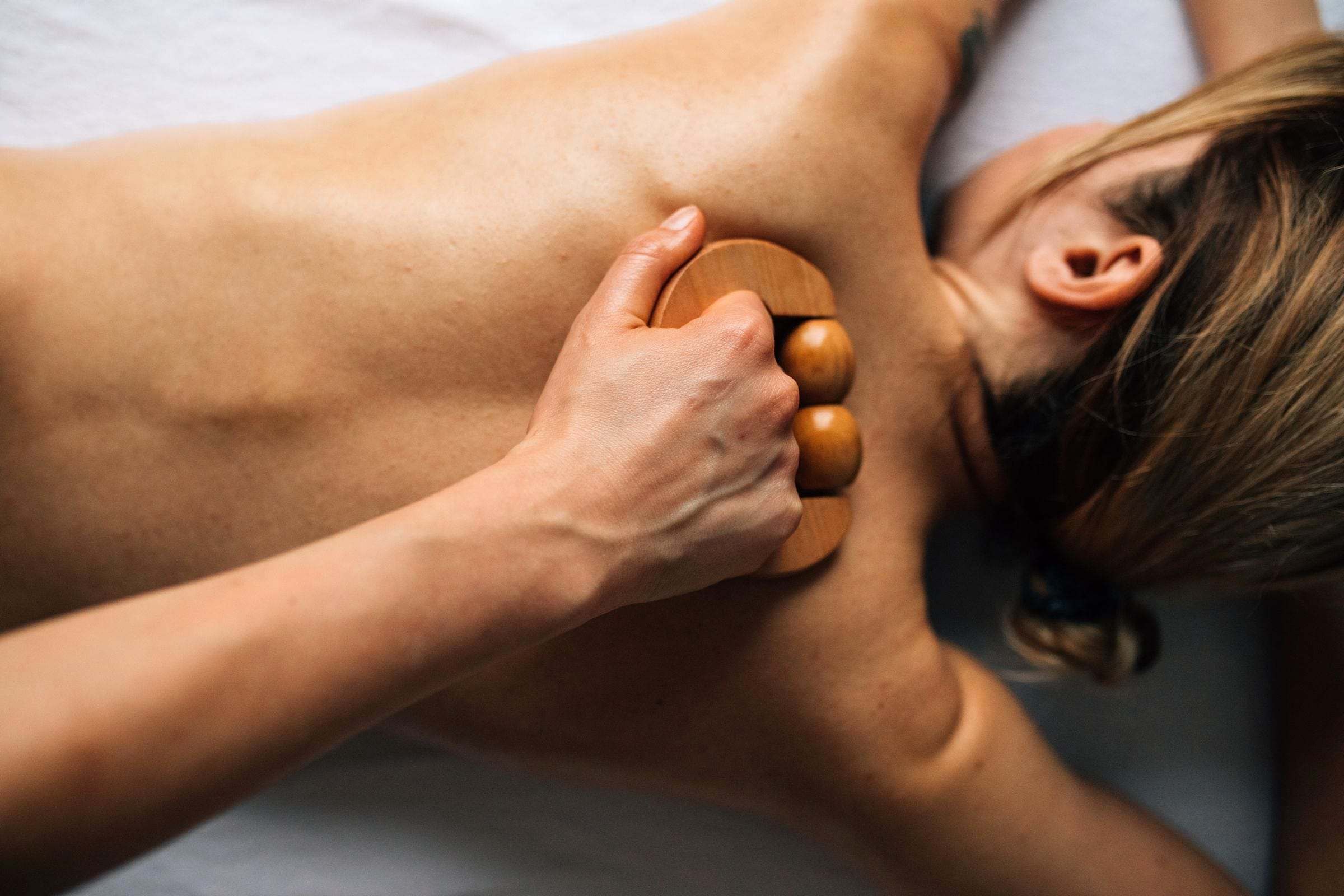
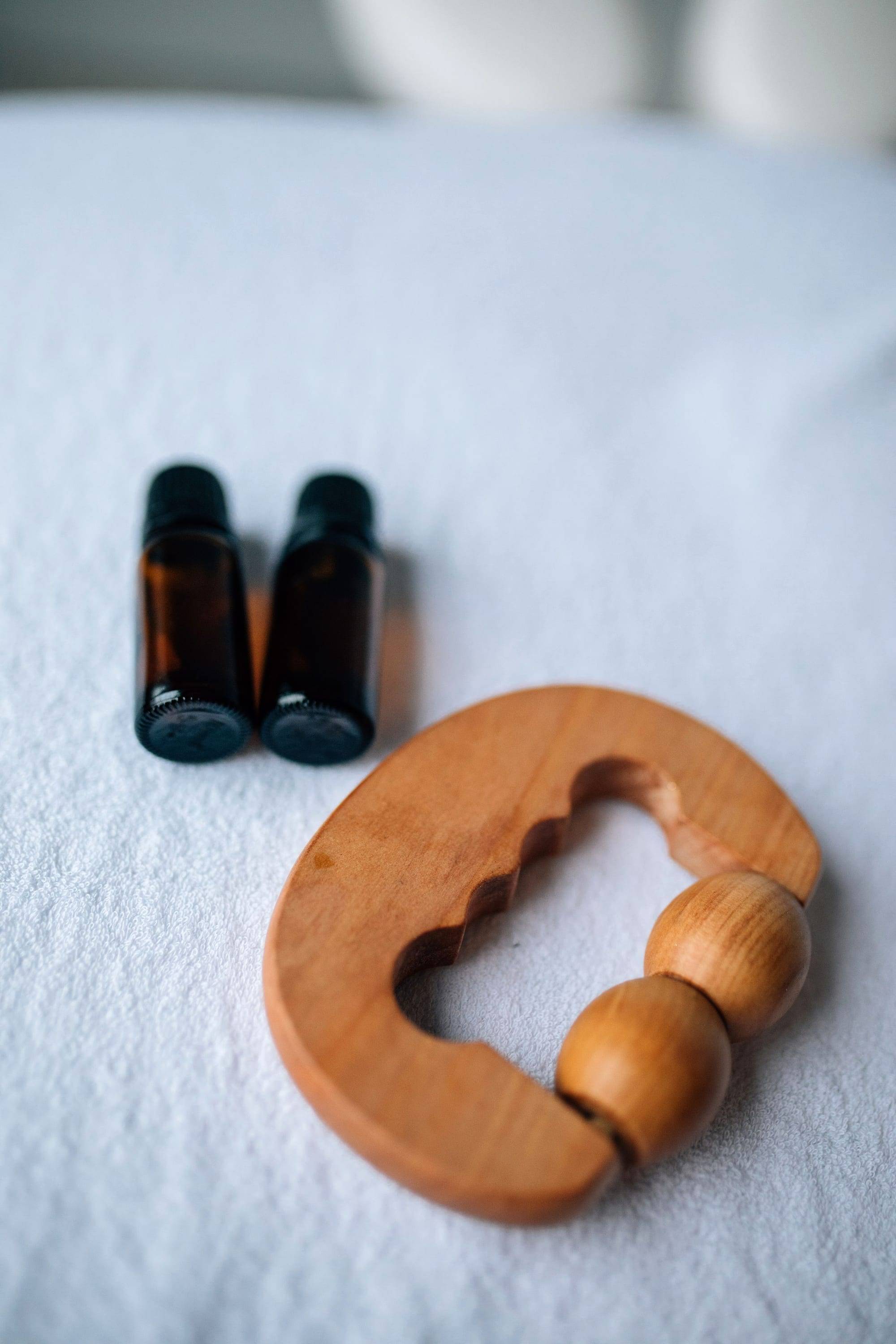
Wood therapy, known in Spain as maderoterapia, is a body massage performed with wooden tools: ridged rollers, cups, contoured boards. Each tool is shaped for a particular area and movement. They glide, press and knead the skin with an intensity that hands alone can’t easily achieve.
The aim is cosmetic: to improve how the skin looks, including the appearance of cellulite, and to leave your body feeling lighter. Over a course of sessions, the skin tends to look more even and feel more toned to the touch.
It feels firm. It’s not a massage to doze off to. The first sessions are best kept gentler to see how your skin responds, and on delicate skin the odd small bruise may appear and soon fade.
How pressotherapy works
Pressotherapy uses boots divided into air chambers. A sequential compression unit inflates them from the feet up to the thighs and then empties them, in repeated cycles over about 30 minutes.
The aim is to support the return of fluid from the legs so they feel lighter and less puffy. It’s a draining effect, not slimming. It feels relaxing: you’re lying down doing nothing while the pressure rises and releases.
Side-by-side comparison
| Wood therapy | Pressotherapy | |
|---|---|---|
| Technique | Hands-on, with wood | Mechanical, with air |
| What you notice most | How the skin looks | Lighter legs |
| Intensity | High | Gentle |
| Relaxation | Moderate | High |
| Session length | 45–60 minutes | About 30 minutes |
| Usual pattern | Course of 10 sessions | Course of 5–10, or one-off |
How it feels
If you don’t get on well with pressure or you’re looking for rest, pressotherapy wins. If you like to feel that something is “really working”, wood therapy is the better fit.
Cellulite
Let’s be clear: neither of them makes cellulite disappear. Cellulite has hormonal and genetic components, and no beauty treatment can make it go away. Because it works directly on the skin, wood therapy is better suited to improving its appearance. Pressotherapy helps indirectly, through its draining effect and the feeling of lightness.
Time and consistency
Both need consistency if you want more than a short-lived effect. Once or twice a week during the course is the usual pattern for both. Pressotherapy has the advantage of also working as a one-off session, whenever you need it.
Who they’re not for
The reasons not to go ahead overlap in part, but not entirely.
Wood therapy isn’t suitable if you have prominent varicose veins, fragile capillaries or bruise easily, take anticoagulants, have a history of thrombosis or phlebitis, are pregnant or breastfeeding, have had recent surgery in the area, or the skin has wounds or an infection.
Pressotherapy isn’t suitable if you have or have had thrombosis or phlebitis, heart failure, uncontrolled high blood pressure, a pacemaker, infections or wounds on your legs, cancer under treatment, or you’re pregnant. And if you have diagnosed lymphoedema, its treatment is a matter for healthcare professionals.
In both cases, if you have any concerns about your veins or heart, see your doctor first.
Which to choose for your situation
- “I’m bothered by orange-peel skin on my thighs and bottom.” Wood therapy, with a full course and supportive habits.
- “My legs feel like lead by the end of the day.” Pressotherapy, on its own or with cold wraps in summer.
- “I want both.” Combine them: wood therapy first and pressotherapy afterwards, or alternate them through the week.
- “I’m looking for firmness in a specific area.” Neither is the best fit; consider a contouring programme such as Bellaction Duo body.
- “I just want to relax.” Neither: book a relaxing massage.
Why combining them works
Wood therapy and pressotherapy complement each other precisely because they do different things. The first works intensively on the skin; the second rounds off the session with a draining effect and a sense of rest. Many people find that combination strikes the right balance between feeling that something is being worked on and leaving relaxed.
There’s no obligation to combine them, and an initial assessment is the place to decide what makes most sense for your goal, your time and how much pressure you’re happy with.
At Narumi
At Narumi, a beauty centre in Málaga city centre, Marta Fernández offers both treatments after an initial assessment in which we go over your goal and your health. If one of them isn’t right for you, we’ll tell you.
- Wood therapy in Málaga: single session and package of 10.
- Pressotherapy in Málaga: sessions, packages of 5 and 10, and cold wraps.
- Bellaction Duo body in Málaga: if firmness in a specific area is your priority.
- Massage in Málaga: if what you want is to switch off.
You’ll find us at Calle Cristo de la Epidemia 33, a few minutes’ walk from El Ejido and the historic centre. Book by WhatsApp or phone on +34 611 500 328. Sessions are in Spanish, but message us on WhatsApp and we’ll do our best to help.
| Wood therapy | Pressotherapy | |
|---|---|---|
| How it's done | Hands-on massage with wooden rollers, cups and boards | Boots with air chambers that inflate in sections |
| Main goal | How the skin looks, and a feeling of lightness | Light legs and a draining effect |
| How it feels | Intense, more than a massage | Snug, relaxing pressure |
| Areas | Thighs, bottom, abdomen, arms | Legs; abdomen with the suit |
| Typical number of sessions | Course of 10 | Course of 5 to 10, or one-off sessions |
| Common effects | Redness, tenderness; the odd bruise on delicate skin | Needing the loo, faint marks from the boots |
| Not for you if | Prominent varicose veins, fragile capillaries, anticoagulants | Thrombosis, heart failure, a pacemaker |
Frequently asked questions
Which is better for cellulite, wood therapy or pressotherapy?
If your goal is the appearance of orange-peel skin, wood therapy is better suited, because it works directly on the skin. Pressotherapy mainly brings a draining effect and lightness. Neither makes cellulite disappear: both can improve its appearance while you keep up the course and your habits.
Can I have wood therapy and pressotherapy on the same day?
Yes, it's a popular combination. Wood therapy first, working intensively on the skin, then pressotherapy, which adds the draining effect and a more relaxing finish. You can also alternate them on different days in the same week.
Which one is less uncomfortable?
Pressotherapy, by a long way. It's a snug pressure that most people find pleasant. Wood therapy is more intense than a standard massage; it should be bearable and is adjusted with you, but you'll really feel it in some areas.
Will either of them help me lose weight?
No. Neither wood therapy nor pressotherapy burns fat or makes you lose weight. They can go alongside a change in habits and improve how your legs feel and look, but the foundation for weight loss is still diet and physical activity.
How many sessions of each will I need?
Wood therapy is usually planned as a course of 10 sessions, once or twice a week. Pressotherapy as a course of 5 to 10, at the same frequency, or as one-off sessions whenever your legs feel heavy. Results vary from person to person.